CEFABLAST 500 MG TABLET
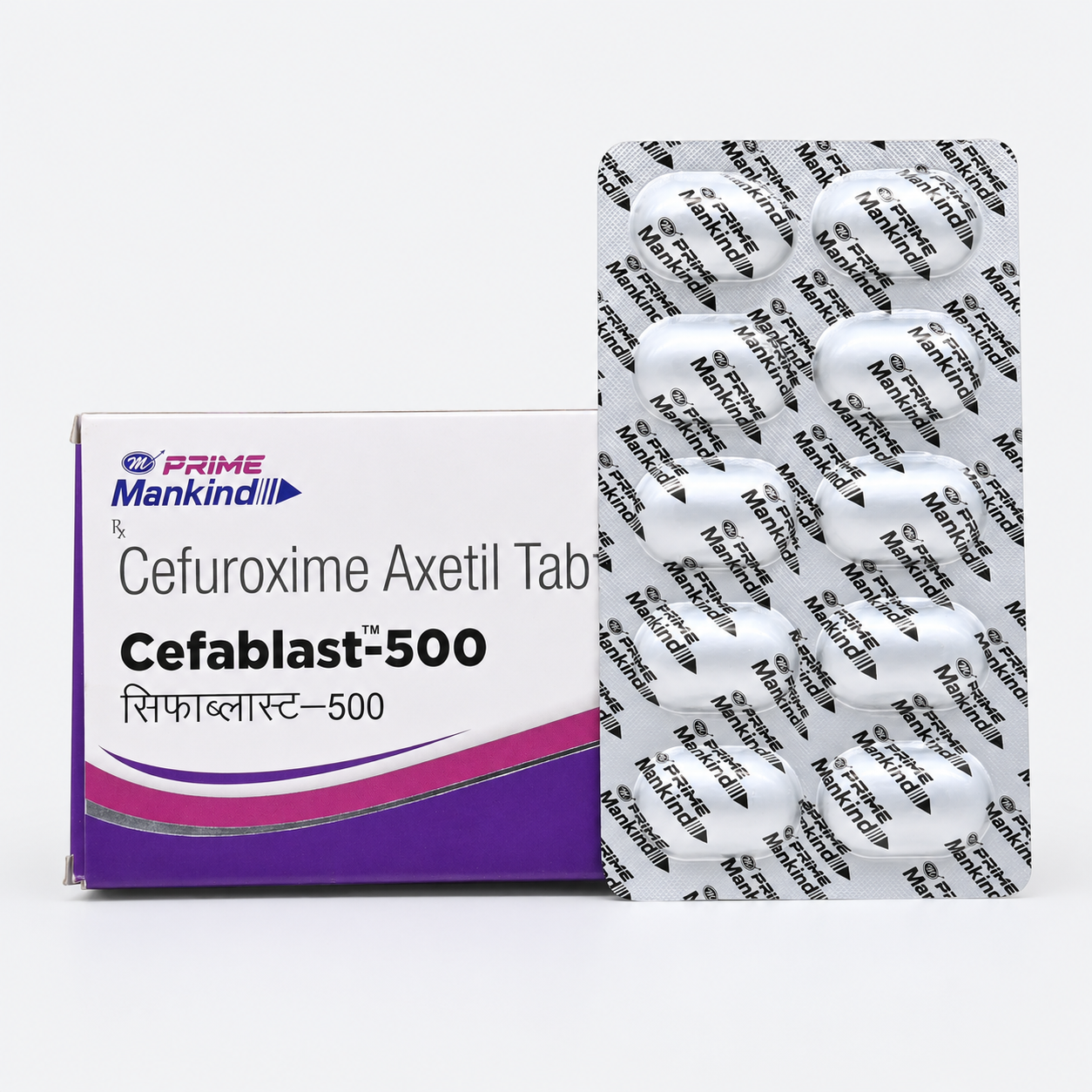
Category: Anti biotics
Brand: ABBOTT HEALTHCARE PVT LTD
Composition / Active Salts
Price: ₹270.00
MRP: ₹540.00 (50% OFF)
Inclusive of 5% GST
Pack Size: A pack of 10 Tablets
Availability: In Stock
Description
Cefablast 500 mg tablet is a prescription medication that belongs to the class of cephalosporin antibiotics. It is composed of cefuroxime, a second-generation cephalosporin that is effective against a wide range of bacterial infections. The medication is available in the form of tablets, which are orally administered. Cefuroxime works by inhibiting the synthesis of the bacterial cell wall, ultimately leading to the death of the bacterial cells. This mechanism of action makes cefuroxime a broad-spectrum antibiotic, capable of treating various types of bacterial infections, including those caused by gram-positive and gram-negative bacteria. The chemical name of cefuroxime is (6R,7R)-3-[(2Z)-2-(2-amino-4-thiazolyl)-2-(methoxyimino)acetyl]amino-7-[[(2Z)-2-(2-furyl)-2-(methoxyimino)acetyl]amino]-8-oxo-5-thia-1-azabicyclo[4.2.0]oct-2-ene-2-carboxylic acid. The molecular formula of cefuroxime is C22H21FN4O8S, and its molecular weight is 524.5 g/mol. Cefablast 500 mg tablet is a white, film-coated tablet that is scored on one side and has a smooth, glossy finish. The tablet is designed to be orally administered, and it is usually taken with food to minimize gastrointestinal side effects.
Uses & Indications
Cefablast 500 mg tablet is used to treat a variety of bacterial infections, including respiratory tract infections, urinary tract infections, and skin and soft tissue infections. The medication is effective against a range of bacterial pathogens, including Streptococcus pneumoniae, Haemophilus influenzae, and Escherichia coli. Cefuroxime is also used to treat infections of the bones and joints, such as osteomyelitis and septic arthritis. In addition, the medication is used to treat infections of the abdomen, such as peritonitis and cholecystitis. Cefablast 500 mg tablet is usually prescribed for a period of 7-14 days, depending on the severity and type of infection being treated. Cefablast 500 mg tablet is also used to treat infections in patients with compromised immune systems, such as those with HIV/AIDS or cancer. The medication is also used to treat infections in patients who have undergone surgery or have been injured in an accident. In some cases, cefuroxime may be used in combination with other antibiotics to treat complex infections. The medication is usually prescribed by a healthcare provider, and it is essential to take the medication exactly as directed to ensure effective treatment and minimize the risk of side effects. Patients should not stop taking the medication without consulting their healthcare provider, even if they start to feel better before completing the full course of treatment.
Benefits
Cefablast 500 mg tablet has several benefits, including its broad-spectrum activity against a range of bacterial pathogens. The medication is effective against both gram-positive and gram-negative bacteria, making it a versatile treatment option for various types of infections. Cefuroxime is also relatively well-tolerated, with a low incidence of serious side effects. The medication is usually taken orally, which makes it convenient for patients to take at home. In addition, cefuroxime has a relatively long half-life, which allows for twice-daily dosing in many cases. This can improve patient compliance and reduce the risk of missed doses. The use of Cefablast 500 mg tablet can also help to reduce the risk of complications associated with bacterial infections. For example, untreated respiratory tract infections can lead to complications such as pneumonia, bronchitis, and sinusitis. Similarly, untreated urinary tract infections can lead to complications such as kidney damage and sepsis. By treating bacterial infections promptly and effectively, cefuroxime can help to prevent these complications and improve patient outcomes. In addition, the medication can help to reduce the risk of antibiotic resistance, which is a growing concern in the treatment of bacterial infections. By using cefuroxime judiciously and only when necessary, healthcare providers can help to minimize the risk of resistance and ensure that the medication remains effective for future use.
Side Effects
Cefablast 500 mg tablet can cause a range of side effects, including gastrointestinal symptoms such as diarrhea, nausea, and vomiting. The medication can also cause allergic reactions, such as rash, itching, and hives. In some cases, cefuroxime can cause more serious side effects, such as Stevens-Johnson syndrome and toxic epidermal necrolysis. These conditions are characterized by severe skin and mucous membrane lesions, and they can be life-threatening if not treated promptly. Cefuroxime can also cause hematologic side effects, such as anemia, thrombocytopenia, and leukopenia. Cefablast 500 mg tablet can also cause renal side effects, such as increased creatinine levels and renal failure. The medication can also cause hepatic side effects, such as increased liver enzymes and hepatitis. In some cases, cefuroxime can cause neurologic side effects, such as seizures, tremors, and dizziness. The medication can also cause cardiovascular side effects, such as hypotension and cardiac arrhythmias. Patients who experience any of these side effects should contact their healthcare provider promptly, as they may require medical attention. In addition, patients should be monitored closely for signs of an allergic reaction, such as difficulty breathing, swelling of the face or throat, and rapid heartbeat.
How To Use
Cefablast 500 mg tablet is usually taken orally, with or without food. The medication should be taken exactly as directed by the healthcare provider, and patients should not stop taking the medication without consulting their healthcare provider. The usual dose of cefuroxime is 250-500 mg every 12 hours, depending on the severity and type of infection being treated. The medication should be taken at evenly spaced intervals to maintain a consistent level of the medication in the bloodstream. Patients should also be advised to drink plenty of fluids while taking cefuroxime to help prevent kidney stones. Patients who have difficulty swallowing the tablet can crush it and mix it with a small amount of food or liquid. However, the medication should not be chewed or crushed without consulting the healthcare provider, as this can alter the release characteristics of the medication. Cefablast 500 mg tablet should be stored at room temperature, away from moisture and heat. The medication should also be kept out of reach of children and pets to prevent accidental ingestion. Patients who miss a dose of cefuroxime should take it as soon as they remember, unless it is almost time for the next dose. In this case, the missed dose should be skipped, and the patient should continue with their regular dosing schedule.
How It Works
Cefablast 500 mg tablet works by inhibiting the synthesis of the bacterial cell wall. The medication binds to penicillin-binding proteins (PBPs) on the surface of the bacterial cell, which are essential for the synthesis of the cell wall. By binding to these proteins, cefuroxime prevents the formation of a stable cell wall, ultimately leading to the death of the bacterial cell. The medication is effective against a range of bacterial pathogens, including gram-positive and gram-negative bacteria. Cefuroxime is also relatively stable against beta-lactamase enzymes, which are produced by some bacteria to inactivate penicillin and other beta-lactam antibiotics. The mechanism of action of cefuroxime involves the inhibition of the transpeptidation reaction, which is essential for the cross-linking of peptidoglycan chains in the bacterial cell wall. By inhibiting this reaction, cefuroxime prevents the formation of a stable cell wall, ultimately leading to the death of the bacterial cell. The medication also has a bactericidal effect, meaning that it kills the bacterial cells rather than simply inhibiting their growth. This makes cefuroxime a highly effective treatment option for a range of bacterial infections. In addition, the medication has a relatively long half-life, which allows for twice-daily dosing in many cases. This can improve patient compliance and reduce the risk of missed doses.
Precautions
Cefablast 500 mg tablet should be used with caution in patients with a history of allergic reactions to penicillin or other cephalosporin antibiotics. The medication should also be used with caution in patients with renal impairment, as it can cause increased creatinine levels and renal failure. Cefuroxime should also be used with caution in patients with hepatic impairment, as it can cause increased liver enzymes and hepatitis. Patients who are taking other medications that can affect the kidneys or liver should be monitored closely for signs of toxicity. In addition, patients who are taking anticoagulant medications should be monitored closely for signs of bleeding, as cefuroxime can increase the risk of bleeding. Cefablast 500 mg tablet should not be used in patients with a history of severe allergic reactions to cefuroxime or other cephalosporin antibiotics. The medication should also not be used in patients with a history of porphyria, as it can exacerbate this condition. Patients who are pregnant or breastfeeding should use cefuroxime with caution, as the medication can cross the placenta and be excreted in breast milk. The medication should also be used with caution in patients with a history of seizure disorders, as it can increase the risk of seizures. In addition, patients who are taking other medications that can affect the central nervous system should be monitored closely for signs of toxicity.
Warnings & Contraindications
Generic Alternatives
- FRAXILIA TABLET — ₹142.37 | ELINOR PHARMACEUTICALS PVT LTD
- TRUFUROX 500MG 10 TABLET — ₹201.27 | AVIGHNA MEDICARE PVT LTD
- CEFTUM 500MG 4 TABLET — ₹202.51 | Glaxo SmithKline Pharmaceuticals Ltd
- CEFASYN 500MG 4 TABLET — ₹213.75 | Cipla Ltd
- TRUEFUROXX 500MG 4 TABLET — ₹216.00 | AVIGHNA MEDICARE PVT LTD
- SPECTRAXIME 500MG 6 TABLET — ₹240.00 | APEX LABORATORIES PRIVATE LIMITED
- SPECTRAXIME TABLET — ₹240.00 | APEX LABORATORIES PRIVATE LIMITED
- AXIFUR 250 MG TABLET 10 — ₹240.38 | AUROBINDO PHARMA LTD
- CEFOXIM 500MG 10 TABLET — ₹298.57 | Zydus Healthcare Limited
- ZUROXTIL TABLET 6S — ₹324.00 | VASU ORGANICS PVT LTD